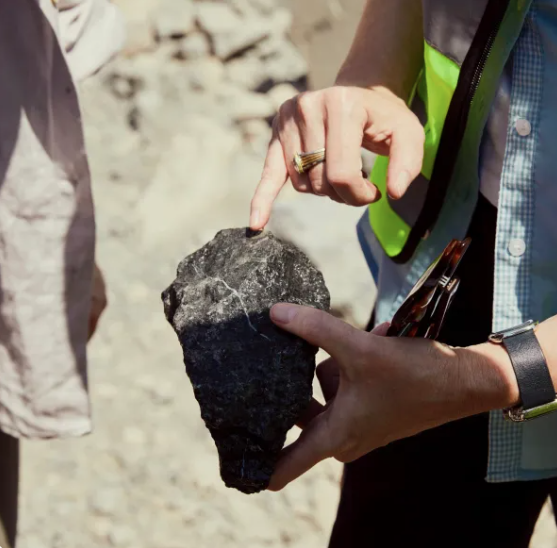
The natural diamond industry has a profound and measurable impact on global communities. It directly supports the livelihoods of 10 million people worldwide, and, on average, 80% of the value generated by responsible diamond recovery is retained locally. Benefiting communities both directly and indirectly, this translates into jobs, infrastructure, healthcare, education, and social programs, alongside significant tax and royalty revenues that sustain national economies.
Botswana’s economy was transformed by the natural diamond industry, built on the responsible management of its resources. Diamonds have also fueled Botswana’s infrastructure development, with paved road coverage growing from 12 kilometers in 1966 to more than 10,000 kilometers in 2022.
Today, all primary-age children receive free state education, and in 2023 the government covered fees for 67 percent of tertiary-level students.
Canada
Canada’s diamond industry is a remarkable story of discovery and impact. Home to some of the world’s oldest diamonds—formed 3.5 billion years ago—Canada has built a thriving industry in the Northwest Territories (NWT), a region with just 45,000 people, half of whom are Indigenous. Since 1996, diamond mines have contributed C$27.7 billion (US$21.8 billion) to the Canadian economy, with nearly 70 percent spent locally, including C$8.6 billion with Indigenous-owned businesses. The sector has created more than 74,000 cumulative years of employment and generated over half of the NWT government’s revenues from taxes in recent years.